Key takeaways from Boris Cherny on building Claude Code
Key insights from Boris Cherny's Acquired Unplugged interview on building Claude Code, the death of traditional roles, and why the golden age of the generalist is here.
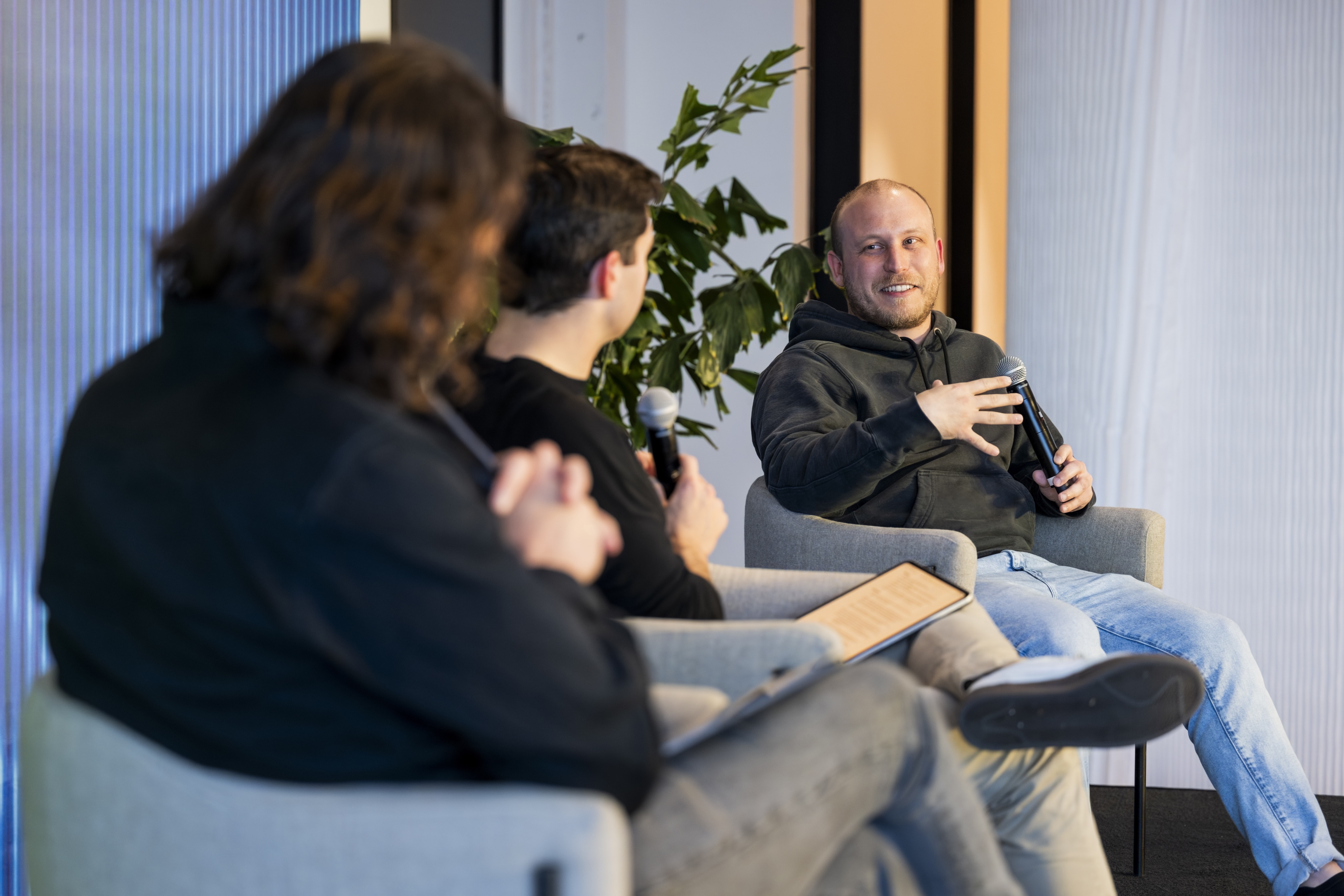
Boris Cherny, creator of Claude Code at Anthropic, joined Ben Gilbert and David Rosenthal at Acquired Unplugged, presented by WorkOS, for a wide-ranging conversation about how AI coding tools are reshaping engineering. The whole interview is worth watching, but a few moments stood out as genuinely important for anyone building software teams today.
From 10% to Uninstalling the IDE
Claude Code started on a prototyping team at Anthropic in late 2024. Early on, it wrote maybe 10–20% of Boris's code. Then the underlying models improved — Sonnet 3.5, Sonnet 4, Opus — and the percentage climbed fast. By around that time, Boris uninstalled his IDE because he hadn't opened it in a month.
Now he doesn't even prompt Claude directly. He writes loops — automated workflows that prompt Claude and figure out what to build next. His job shifted from writing code to orchestrating agents. That's a meaningful phase change, not an incremental improvement.
Engineering productivity is compounding
Since adopting Claude Code internally, Anthropic has doubled its Engineering org, and per-engineer productivity (merges/engineer/day) has increased 200%. Today, over 90% of the Claude Code team's code is written with Claude Code.
More striking: new engineer ramp-up time dropped from weeks to roughly two days. New hires ask Claude how to query a database, and it already knows the codebase well enough to answer.
Scaling engineering teams usually decreases per-capita productivity. More people means more coordination overhead. Claude Code is reducing that coordination cost at Anthropic, though whether it fully inverts the dynamic at larger scales remains to be seen.
The golden age of the generalist
The most provocative part of the conversation wasn't about code — it was about roles. Boris described a team where every engineer does scoping, talks to users daily, pulls data, builds dashboards, and ships design work. Designers ship code. The chief of staff ships code. A finance person ships code.
His advice to founders: staff projects with fewer people than you think you need, give them abundant tokens, and let them figure it out. The constraint forces automation, and the automation compounds.
"Right now, this is just the golden age of the generalist. People that want to do more than one thing — it's never been more fun."
Taste has a shorter shelf life than you think
Boris shared a telling anecdote: he enforced a strict no-classes, functions-only rule in the Claude Code codebase. Engineers snuck classes in on weekends. He'd revert them on Monday. Then the model started writing classes too, and the business outcomes were fine — better, even. The opinion he held so strongly turned out to be just that: an opinion.
He thinks product taste — the thing everyone currently calls the durable human edge — is also on borrowed time. He already has hundreds of Claude instances monitoring Twitter feedback, GitHub issues, and Slack to generate product ideas. Most are bad today. He expects most to be good within months.
The last thing we'll teach the model
When asked what humans will ultimately remain uniquely good at, Boris's answer was simple: values. Not code, not design, not product sense. Teaching the model how to be a good model — the same way we teach kids how to be good people.
That's a fitting frame from someone at a company whose mission centers on AI safety.