We gave init() developers an ESP32-S3 computer as a conference badge. They put DOOM on it.
Braelyn put DOOM on her init() badge. Others built a Tamagotchi, voice assistants and a flight tracker. Here's the ESP32 badge and how 500 got ready in time.

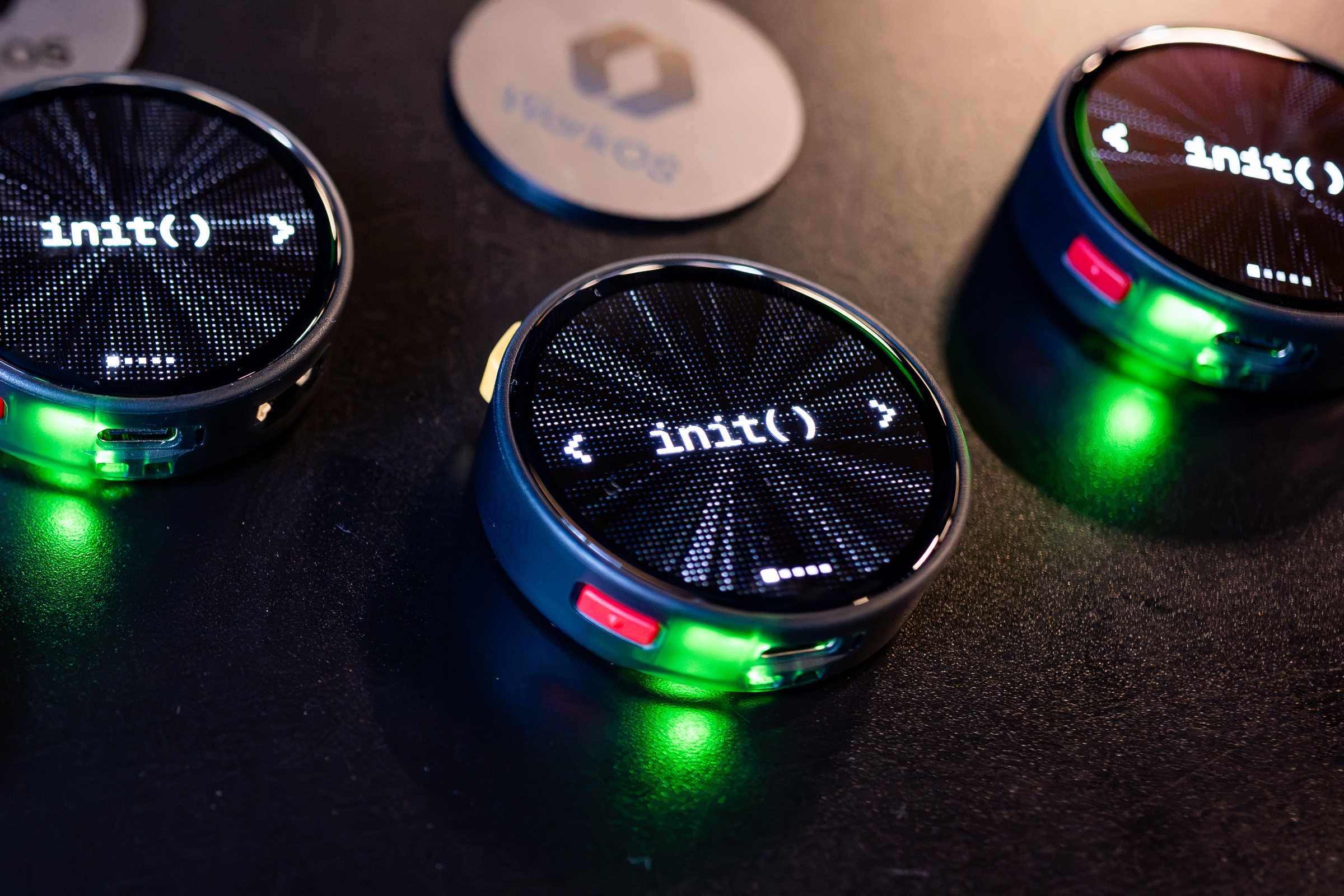
On the afternoon of init(), Braelyn posted a short question with a 17-second video attached: can the WorkOS conference badge play DOOM? The video shows DOOM on the badge: a first-person scene, pistol and status bar included, moving across its small round screen.
About an hour earlier she had shared a few of her custom faces for the same badge, in a video and photos, and called it the "coolest hackable conference gear" of the event. She later published the faces as a fork of the conference firmware. Its animated pages include googly eyes whose pupils fall with gravity and bounce off the rims, a breathing HAL 9000 lens, Matrix rain, Tron's Bit and a labyrinth you tilt to roll a marble into the center of a maze.
I put animated versions of my own avatar on mine.
Every attendee at init(), WorkOS's October 7 conference at SFJAZZ Center in San Francisco, took one of these badges home. The talks and product previews are in the full init() 2026 recap. The badge got a second life on X, where people kept posting what they had made it do.
What people built
WorkOS asked attendees on X that afternoon to share their badge hacks. Sofía had seen the customizations Braelyn and Andrew Baker made, so she went home and built a Tamagotchi.
Two people gave the badge a voice. Amanda put a Vapi assistant on hers, posted the video and called it her new favorite conference badge. Moses Rajan built a voice agent he named Wos and thanked Chan for his "inspirational demo."
Others pointed it at the sky. Aryan Gupta flashed a flight tracker onto his, in time for SF Fleet Week. Shapor Naghibzadeh got QueryStoryAI running on it, rendering every human-launched satellite in 3D, and called it the best conference badge yet.
Some of it was just for fun. Kshitij ran home to customize his and ended up with little games. One parent replied to WorkOS with a badge turned into a TV remote, a backup for when the kids steal the real one.
Why people loved it
The praise started on the morning of the conference. Sriram called it the best name badge he'd ever gotten. @freyadnd wrote that WorkOS had already won best merch of tech week with its "modular badge." Mark Villacampa named it the coolest SF Tech Week badge and pointed out that it has, literally, a "hack this device" menu item. Amanda thanked Michael Chan for "designing the coolest conference badge I've seen."
A badge built to be hacked
The badge is an M5Stack StopWatch: an ESP32-S3 with a 1.75-inch round AMOLED touchscreen, two buttons, a mic and speaker, Wi-Fi and Bluetooth, and a battery. It also has a motion sensor, a Grove port for plug-in sensors and modules, ESP-NOW for talking badge to badge, and four magnets in the back plate.
The conference firmware works offline, with no account or sign-in. It shows an init() animation, the schedule, a badge page with the name, social handles and photo you set from your phone, a Hack your Badge page with a QR code, and settings.
The badge page picks up from there. Its build guides cover a bubble level, a Couch to 5K plan that buzzes, a sound meter, a walkie-talkie that reaches nearby badges without a router, room trivia, and an agent pet that shows what your coding agent is up to. Each guide ends with a prompt you can hand to a coding agent, and a SKILL.md file gives that agent the board's details before it writes code. Chan's ESPtember site lists 35 ESP32 builds, among them a Tamagotchi, a Pokedex, real-time captions, AuthKit sign-in and a Pi Pet for coding-agent sessions.
Breaking things is part of the deal. On badges that kept the conference storage layout, the installer on the badge page puts the init() build back from desktop Chrome or Edge over USB, and a separate guide restores the M5Stack factory demo. Braelyn's fork keeps your profile, photo and settings when you install it.
500 badges, flashed by hand
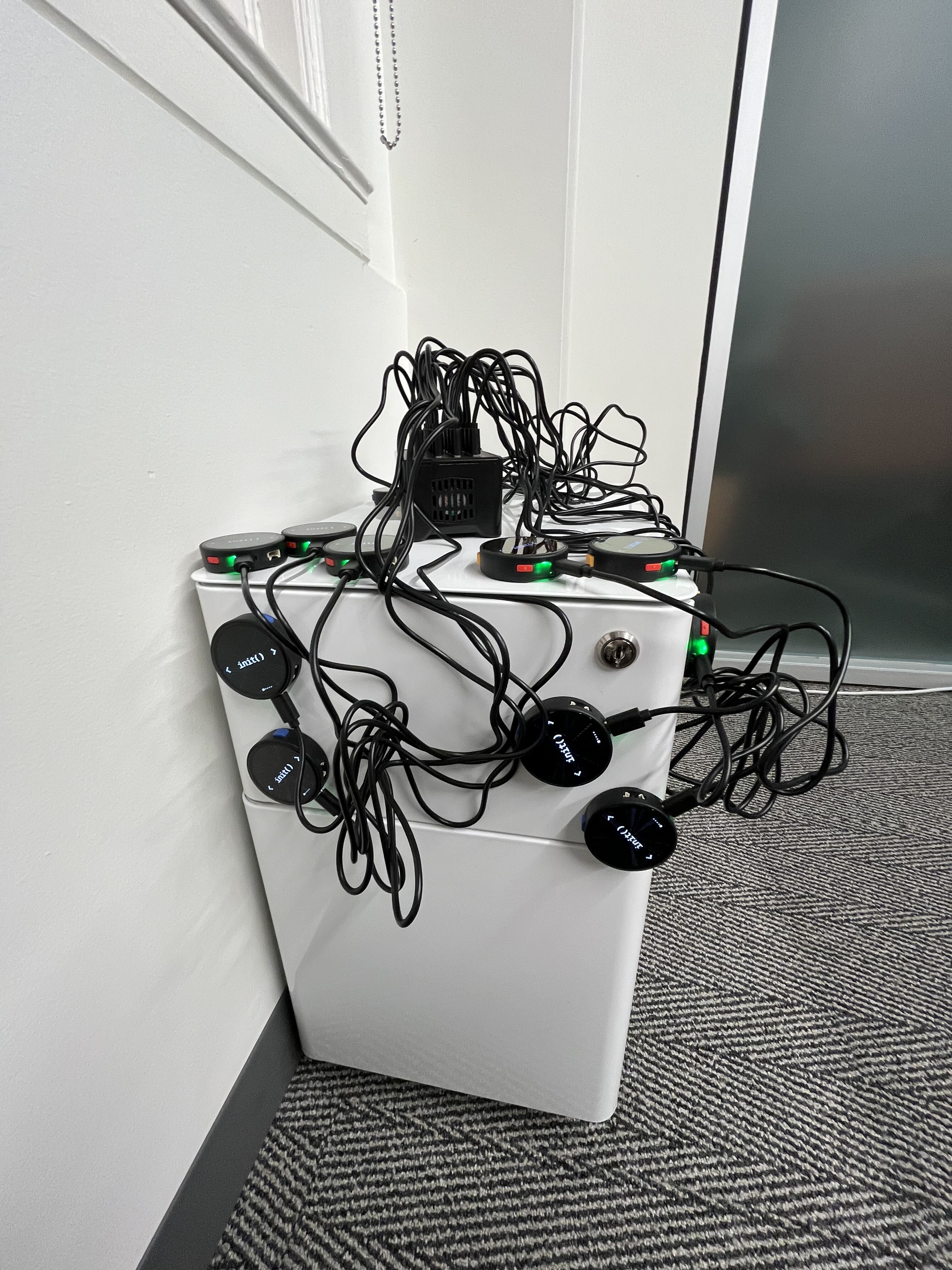
WorkOS founder Michael Grinich said the company had about 500 badges shipped from China and loaded with custom firmware and example apps. Michael Chan, who does video and developer education at WorkOS, had been livestreaming himself adding AuthKit to microcontrollers when Grinich proposed an ESP32 hack night. Chan ordered the hardware and started building 35 projects while waiting to see whether it would arrive in time. Once the badges arrived, he and his friends spent nights and weekends charging and flashing all 500.
Keara, on the WorkOS team, was one of the people doing that work, running badges through a flashing station and keeping them charged.
On stage: Muse, then a signed-in badge
Chan's lightning demo came just before lunch. He opened with Muse, which he described as an agent pet Facebook had announced and open sourced so anyone could build a Muse gadget on an ESP32 board. With five devices on stage, each on Wi-Fi independently, he asked the room to pray for him. He showed a badge running the Muse gadget SDK, pushed and held to ask Muse for the land speed of a swallow, and got a text reply. He said he thought audio responses would follow as the API opened up.
The second demo was personal. Chan wanted a caption device for people who are hard of hearing, one that is clearly not a phone, because holding up a bright phone in a conversation tends to get you told to put it away. He signed his own badge in with AuthKit on stage. He fixed a mistyped email, fetched a code from his email app, hit Confirm, and the badge came back signed in through the device grant flow, which he said comes out of the box with WorkOS. The badge page describes the same idea for keyboardless hardware: the badge shows a QR code, you approve on your phone, and it knows who you are.
Signed in, the badge listed his connected services, which he said included xAI, YouTube and Deepgram. He started a little app he called Easy Captions and described live captions arriving as fast as he could talk. He didn't say which service did the transcribing. That was Chan's own badge. The conference firmware stays offline until you add sign-in yourself.
Where to start
Chan's advice after the event was a short progression: pick a silly project from ESPtember, set up AuthKit on the badge, then use Pipes for the data connectors. Pipes connects a user's third-party accounts without your app managing OAuth flows, token refresh or credential storage. If you'd rather start from someone else's faces, Braelyn's init-badge-hacks repo is a fork of the conference firmware.
Chan ended his demo by calling this the best time in history to build personal hardware and projects for yourself. That afternoon, Braelyn had DOOM on hers.