MCP Night 4 panel recap: what six months of agents actually changed
Highlights from the MCP Night 4 panel hosted by Michael Grinich, with Brendan Irvine-Broque (Cloudflare), Claire Vo (Chat PRD), and David Cramer (Sentry). The group debated what's actually changed in agents over the last six months, how products and users are shifting, and what to expect a year out.
A recap of the MCP Night 4 panel with WorkOS, Cloudflare, Sentry, and Chat PRD on how agents are reshaping products, users, and commercialization.


At MCP Night 4, we pulled four people on stage who have been shipping agent products in production and asked them what's actually changed — not the hype, the real deltas. The panel was hosted by Michael Grinich, founder of WorkOS, with Brendan Irvine-Broque, Senior Director of Product at Cloudflare; Claire Vo, Founder of Chat PRD and host of How I AI; and David Cramer, CPO and Co-Founder of Sentry.
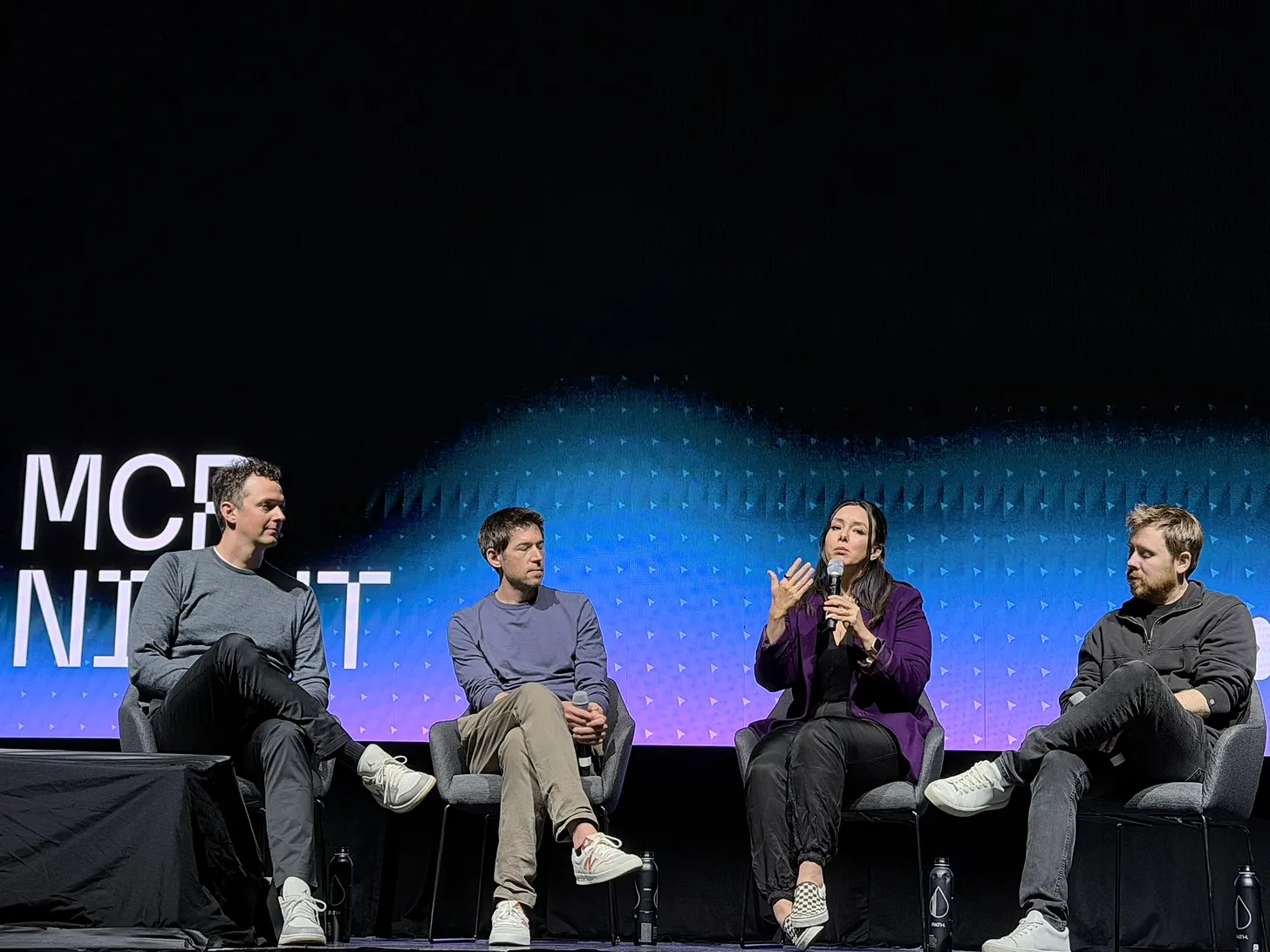
David and Brendan both spoke at the first MCP Night a year ago, and Claire spoke at our Enterprise Ready conference back in October, so this was a checkpoint as much as a panel.
What actually changed in six months
David opened with healthy skepticism: a lot of the problems from a year ago are still problems. What's shifted is that engineering teams who were on the fence are now leaning in.
Claire disagreed. She pointed to Claude Opus as a step-change model — "it can really cook" — followed by OpenAI's o1 and Codex as another hit. She's running so many Opus instances that she's had to physically go downstairs to reset Mac minis to keep them up. The mood among the leaders she advises has flipped from "should we?" to "we need to move faster."
Brendan's framing: six months ago people were using agents solo. Now they're using them in multiplayer mode, in shared chats, learning from each other in real time. That's the recursive effect pulling the skeptics in.

Build vs. buy, and the death of the chat box
Claire said she's watching people move out of chat interfaces and into local, file-based agent systems, whether that's polished business tooling or hacker-grade CLI setups. On the engineering side, teams are skipping the "buy" version of background agents and going straight to build, because the infrastructure is finally good enough to roll your own.
Brendan agreed from inside Cloudflare. They built an internal resource called the engineering codex that acts as the source of truth for how work gets done at the company, and they hand it to every agent. When you have hundreds of code bases, shared context is what makes the difference.
David's been through the same loop at Sentry — internal background agents, shared chat bots, knowledge bases. His take: generalized solutions don't work well enough yet, so hyper-specific in-house tools win. Sentry's Slack bot, shipped a few months ago, got mainstream adoption inside the company almost immediately. He also called out that Claude Code is local-only with no sharing, which is why he doesn't really use it despite liking the software.

The product surface is changing
Sentry's Seer pulls stack traces and errors and reasons about them, and they've shipped a new security product. But David was candid: Sentry doesn't auto-fix bugs to a degree they'd consider acceptable yet. The harder shift is that more non-developers are now trying to do developer things, and Sentry has to decide how far down-market to meet them.
Brendan's version: onboarding used to start in the Cloudflare dashboard. Now it often starts inside someone else's product — a coding agent that happens to use Cloudflare under the hood. Two years ago, the idea of a non-engineer using the Cloudflare CLI was absurd. Today it's normal, and the team is actively designing CLI output for agents to consume.
Claire's pushback on the agent-everything reflex: not every problem needs a computer. Turn-based tool interfaces are still better for plenty of use cases, and the added latency from multi-step autonomous systems is a real detriment when the task doesn't justify the complexity. Product teams have to pick the right tool for the job instead of throwing an agent at everything.

Who's actually paying?
David used WordPress plugin authors as the analogy: people Sentry historically wouldn't have served are now building real software, even when they're not traditionally capable of it. The growth is real, but Sentry is allergic to fraud and abuse, so they're cautious about agent-driven sign-ups that look a lot like growth and a little like risk.
Claire reframed it: your user is changing — either becoming less technical or no longer human — but your customer is still someone with a credit card or a PO. Commercialization fundamentals don't bend just because the user base shifted. You can acquire every agent in the world; if no human writes the check, it doesn't matter when VC money dries up.
On agents-as-customers, the panel split. David is anti-agent-signup for now. Claire is the opposite — she'd happily hand agents a budget for purchases and sign-ups, and pointed out the underappreciated market of household buyers already running Instacart and Amazon orders through agents. Brendan compared the adoption curve to HTTP moving to HTTP/3: protocols take a long time, early adopters drag everyone else along.
David also noted he uses Sentry through its MCP server more often than the dashboard now. The interaction surface is already shifting, even without anyone declaring it.
Chat isn't dead. Neither are dashboards.
Michael brought up Brian Chesky's recent interview where he said Airbnb users would never want to just chat to book a trip — and the internet's reply was basically "yes we would." Claire's take: don't sleep on chat. On a recent podcast with her friend Hillary, Hillary called natural language the "yappers API" — the most efficient interface available right now. Humans have been trained to yap. It's high bandwidth.
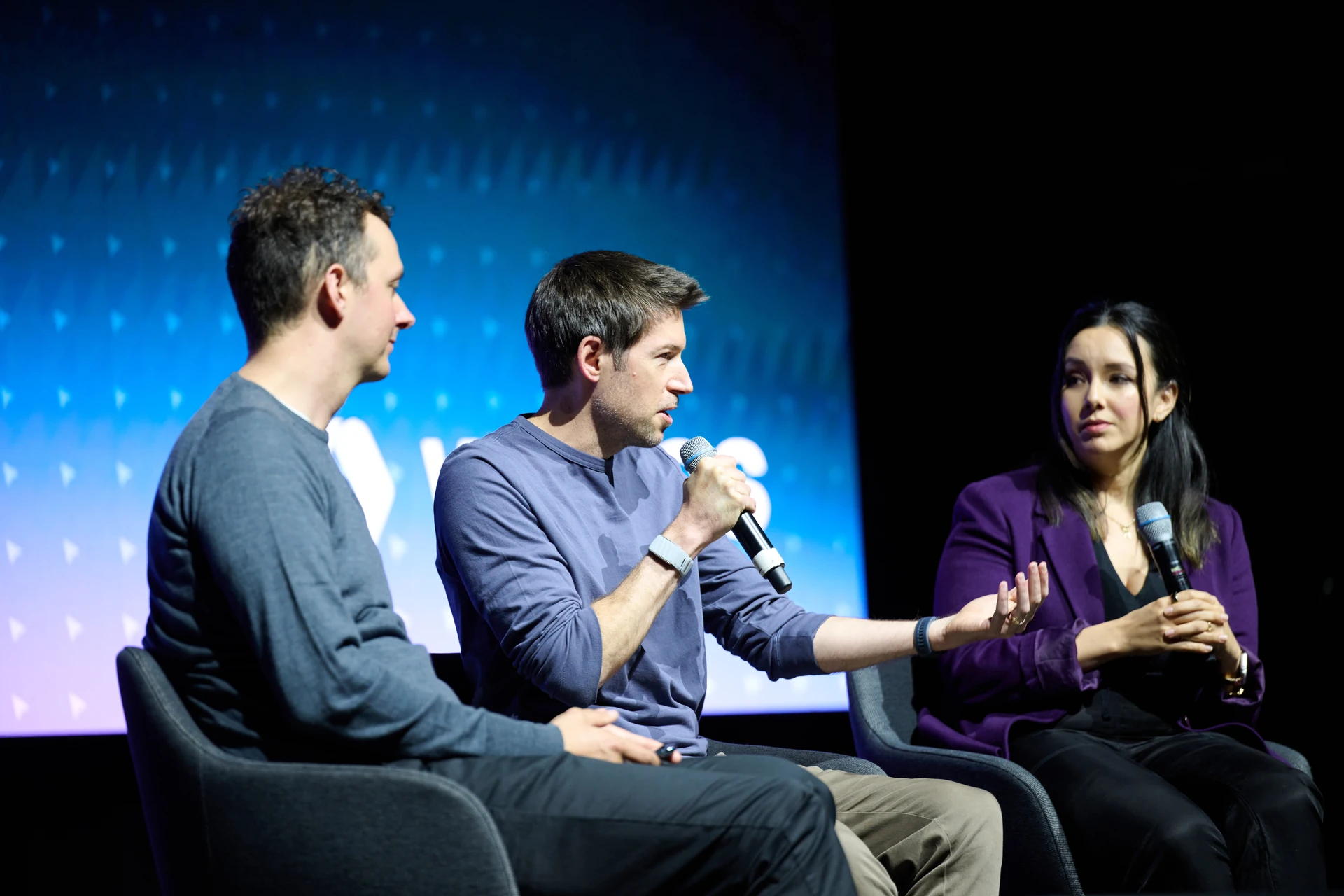
People also love a button, though. The panel landed on hybrid: generative UI, headless flows, and traditional interfaces coexisting. Designers are about to have a very interesting few years.
A year from now
The lightning round predictions:
- David: Applications that improve themselves overnight — agents finding bugs, looking at traces, shipping fixes while you sleep.
- Claire: Leading-edge teams will let agents ship product surface changes as experiments, not just back-end fixes. We'll also look back and find it weird that we all walked around with open laptops on our kitchen counters.
- Brendan: Agents will prepare code but not yet merge it. More interfaces will become model-connected for domains people couldn't previously contribute to — interior design was his example.
The throughline: the protocols, the infrastructure, and the user base are all moving faster than the org charts and design teams that have to absorb them. That's the work for the next year.
Thanks to Brendan, Claire, and David for joining us on stage.