Paul Klein on collapsing the agent stack into one platform
Browserbase founder Paul Klein on collapsing the agent stack into one platform, pointing cheap models at simple sites, and why speed is the last constraint.

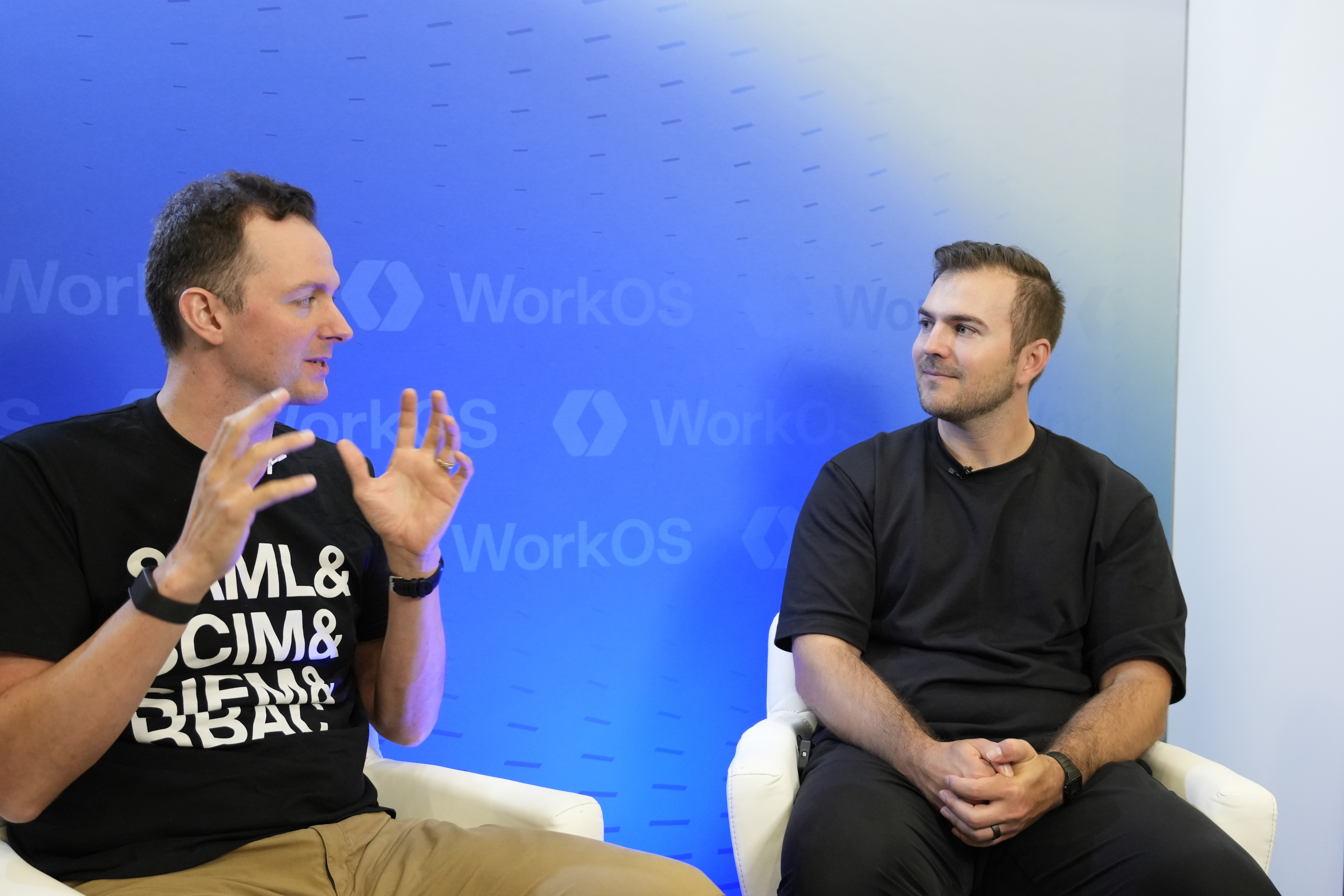
Paul Klein has a list he recites when someone asks why building a web-browsing agent is hard. Sandbox API key, search API key, model API key, observability API key, browser API key. Five subsystems, each a good product on its own, and Klein's read is that the disconnection between them was dragging agent quality down. We caught up with the Browserbase founder and CEO at the WorkOS booth at the AI Engineer World's Fair, six months after his last booth interview at AWS re:Invent, and that list turned out to be the throughline for everything the company has shipped since.
The stack got shorter
Browserbase started as browser infrastructure. It now ships a search API, a fetch API for pulling structured data out of web pages, and its own models with routing and caching. The company's site lists three core capabilities: Search API, Fetch API, and Browser-as-a-Service, with the fetch layer converting any URL into HTML, JSON, or markdown. Klein joked that they may need to rename the company.
None of it came out of a strategy offsite. "Everything we've ever built has come from a customer request," Klein said. "Somebody said, hey, you guys should do this for us. And we ask why and we understand it."
His name for the alternative to five vendors is domain specific infrastructure: if your domain is automating applications on the internet, one platform covers the whole surface. The claim he makes for integration is mechanical rather than philosophical. Search gets better because the browsers get better, and the sandbox has the browser built into it.
That is a bet against every vendor selling one slice of the agent stack on its own. As Klein put it, "maybe the agent stack isn't one separate thing of many different companies, but it's domain specific infrastructure products with many layers of product they offer to make it better".
Batteries included, harness included
The launch Klein brought to the show was Browserbase agents, shipped the day of the interview.
"We built these tools, all the things you need to give your agent access to the web. But people still had to build their own agents," he said. "What we did was we built a custom harness on top of all these tools with models that we could route between and choose from and offer a batteries included computer use agent that actually works."
The harness is the part worth noticing. Every team building browser automation ends up writing one: the loop that decides what the model sees, when to retry, which tool to call, when to give up. Browserbase's bet is that this loop is infrastructure rather than product differentiation, and that most customers would rather inherit a working one. Where a managed harness stops fitting a weird workflow didn't come up in the conversation, and that's the thing to probe in a proof of concept.
Don't point Opus at Craigslist
Klein is blunt about model selection. "It's certainly the wrong approach to take the latest and greatest flagship model like an Opus and dump that onto the web," he said. "The web is quite simple. Craigslist is an easy website to use. It's very straightforward. You could probably use a Haiku with that as opposed to an Opus."
That reasoning is behind Browserbase's model gateway, which lets a customer reach frontier and open source models through a single Browserbase API key — one of the five keys from his opening list, collapsed.
He described a chart that stuck with him: model spend and token usage have come apart, with spend drifting down while token usage keeps climbing. Klein reads that gap as teams getting choosier about which tokens go where, and he frames the job of model-agnostic infrastructure as helping customers get the most out of the spend they have.
The real economy runs on legacy web apps
Ask about the best use cases and Klein skips the consumer demos. The workflows people picture — ordering DoorDash, booking a flight — are the least interesting thing happening on his platform.
One customer serves clinics that take patient referrals from hospitals. Staff used to log into healthcare software every day and click approve on inbound referrals, one at a time, checking whether each patient had the right condition or demographics for the clinic. That's now an agent, meant to make it easier for hospitals to move patients into specialized nursing facilities. Klein says it was a use case he'd never thought of, though the shape of it was familiar: a lot of healthcare back-office work is tedious software built around clicking buttons.
The same pattern shows up across the rest of the economy. Prior authorization before a procedure. Insurance claims, which are painful to submit and worse on the hospital side, where staff log into a different portal for every insurer. Drayage, moving shipping containers off a boat and onto trucks, where one website tells you which container is yours and a second tells you when the truck arrives. A lumber supply company in Mexico that quotes a job by opening a legacy website, filling in a form, and clicking submit.
"So much of the real economy is built on top of PHP apps," Klein said. His argument is that browser automation is the diffusion mechanism for AI into that economy, because that's where the pain actually sits.
The volume gives the argument some weight. Browserbase's site reports 36,925,870 unique browser sessions in March 2026, roughly 800,000 weekly SDK downloads, and 10,000 years spent browsing the web. Years of browsing time saved is the metric the company tracks internally.
Speed is the remaining constraint
Computer use models had two limiters, and one of them is largely handled.
"We mostly solved accuracy, but speed is still the biggest concern, and I think that will be the next big unlock," Klein said. His six-month prediction: computer use models fast enough to drive a page in real time, as fast as a person or faster.
If accuracy is mostly solved at the model layer, the differentiator for anyone shipping browser agents moves to latency, concurrency, and cost per completed task: infrastructure questions, not prompt questions.
What the booths sounded like
Klein's read on the conference was about vocabulary. A year or two ago, people at AI conferences said "agents" without much explanation behind it. This year, everyone has deployed something, hit the edges, and learned where they need to innovate, and the booth copy has gotten more dialed in on what problem each company is actually solving.
Klein treats that shift as a signal rather than conference small talk: clarity about the problem leads directly to better systems. On his side of the industry, that clarity looks like a claim you can go check — that the agents earning their keep are the ones logging into an insurance portal at 6am so somebody in a back office doesn't have to.
This interview was recorded at the WorkOS booth at the AI Engineer World's Fair.