Pricing as product-market fit: Cosmo Wolfe on billing after the Stripe-Metronome acquisition
Cosmo Wolfe explains why AI companies are rethinking pricing, why per-seat models are dying, and what Stripe's Machine Payment Protocol means for agents as buyers.


At HumanX 2026, WorkOS CEO Michael Grinich sat down with Cosmo Wolfe, whose company Metronome was recently acquired by Stripe. The conversation covered something most founders treat as an afterthought but increasingly functions as a core product decision: pricing.
The thesis behind the Stripe-Metronome acquisition is straightforward. Combine Metronome's deep expertise in usage-based billing with Stripe's breadth across payments and finance to create a single, cohesive monetization platform. What made the conversation worth having right now is what's driving that combination — AI companies are changing how they charge faster than the billing infrastructure can keep up.
AI Companies are iterating on pricing faster than ever
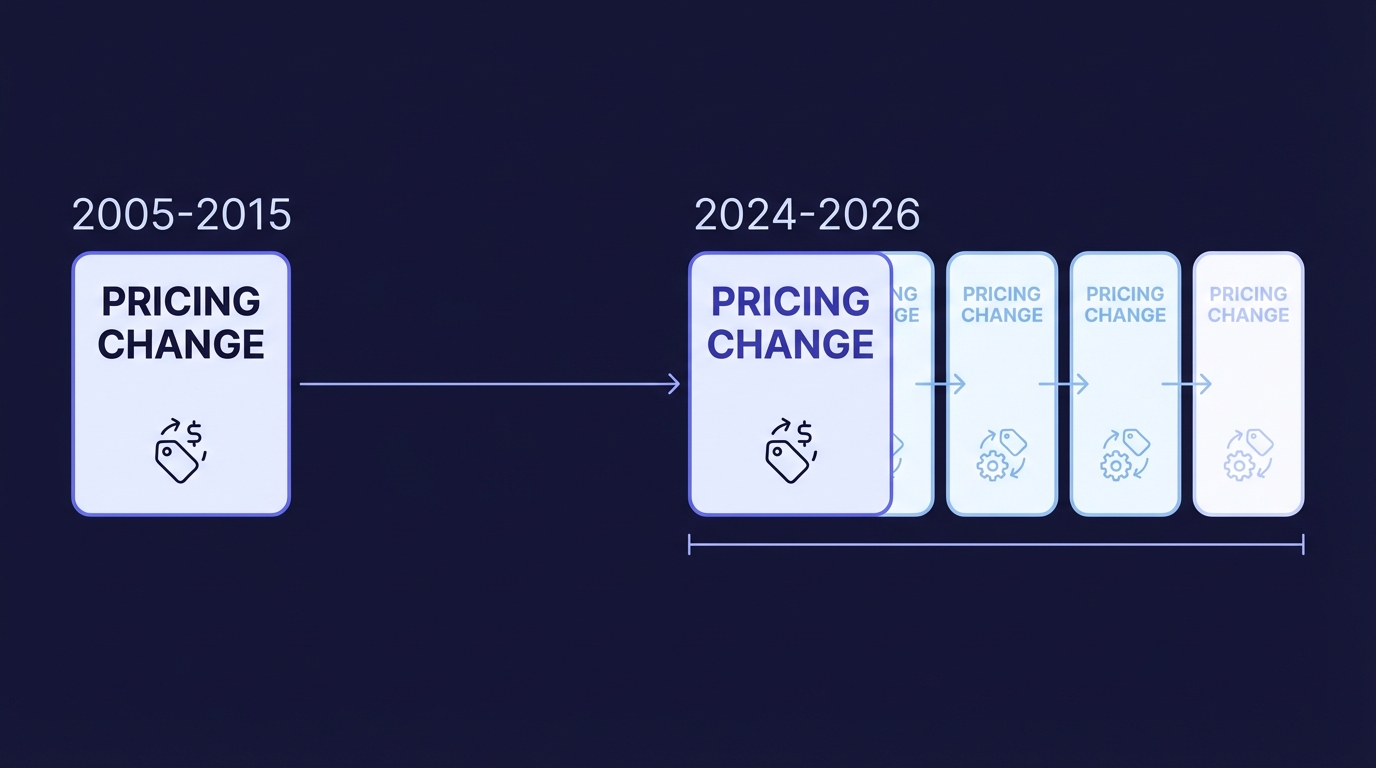
"Ten or twenty years ago, you could create a billion-dollar business without ever changing your pricing," Wolfe said. "Now we're seeing companies launch totally new pricing models five times in the first two years."
AI products are shipping new capabilities on compressed timelines, and each new capability raises the same question: does our current pricing still reflect the value we're delivering? For most teams, the answer keeps changing.
This is the core problem Metronome was built to solve, and it's why the Stripe acquisition makes sense now rather than later. When pricing is a strategic lever you pull constantly — not a number you set once in a spreadsheet — you need infrastructure that treats billing as a first-class product concern.
The death of the seat
Per-seat pricing has been under pressure for years, but AI agents are accelerating the shift away from it. The question every billing team is now asking: is an agent a seat?
Wolfe offered a useful framework. Look at two dimensions: whether the work is autonomous (no human involvement) and whether it's attributable (you can confidently say the agent did it). When both are true — like an agent resolving customer support tickets end-to-end — there's a clear opportunity for more nuanced, value-aligned pricing.
If an agent autonomously handles work that a human used to do, charging per seat stops making sense. The unit of value isn't a person anymore. It might be a resolution, a transaction, a task completed — something that maps directly to the outcome the customer is paying for.
This shift doesn't just affect how companies charge. It affects how they build. Pricing architecture that can handle arbitrary usage dimensions, metering at fine granularity, and rapid model changes isn't a nice-to-have. It's table stakes for any AI-native company figuring out its business model in real time.
Tokens are the new cpu hours
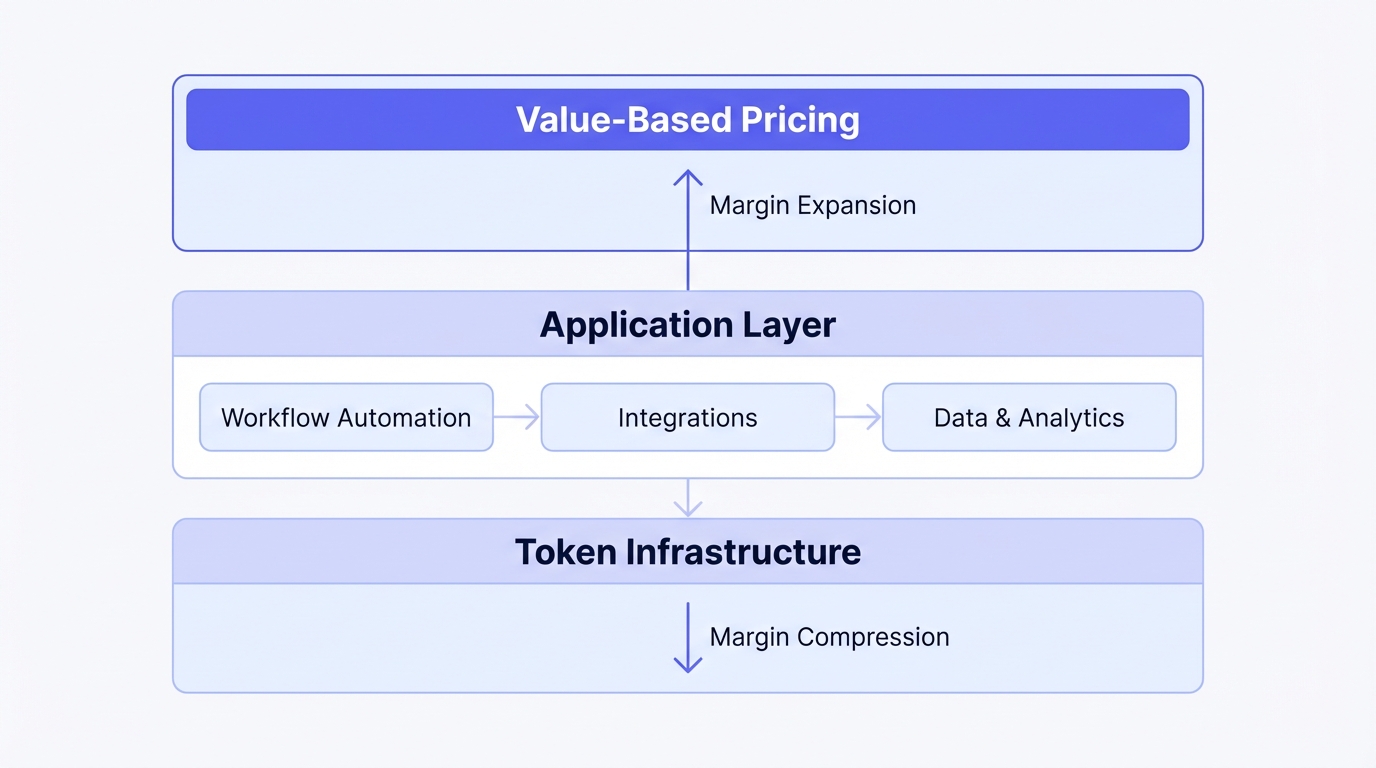
Wolfe drew a sharp analogy: tokens are to AI what CPU hours were to cloud computing. They're the atomic unit of infrastructure — and not where the real value lives.
Just as AWS drove compute margins down over time, token pricing faces the same gravitational pull. The cost of inference is dropping as hardware improves and model architectures become more efficient. Competing on token price is a race to the bottom.
The margin — and the innovation — will live in the application layer above. Companies that align their pricing with the value users actually perceive, rather than the infrastructure cost underneath, are the ones that will build durable businesses. A customer doesn't care how many tokens a query consumed. They care that the agent wrote a working pull request or closed a support ticket.
We saw this play out in cloud infrastructure over the past fifteen years, just compressed into a shorter timeline. The companies that figured out value-based pricing on top of AWS didn't compete with AWS. They built something worth paying for above it.
Agents as buyers: the machine payment protocol
The most forward-looking part of the conversation: Stripe and Tempo's Machine Payment Protocol (MPP), a proposed open standard for giving AI agents the ability to make purchases.
Wolfe is excited about agents as buyers of software — not just users of it. Imagine your coding agent discovering it needs a service, signing up, and paying for it. No human in the loop. No free trial friction. A machine-to-machine transaction that happens because the agent determined it was the right call.
"Most of our docs traffic — even Metronome's and Stripe's — is already coming from agents," Wolfe noted. "How can we make that into a signup funnel that's more than just a free trial?"
This reframes developer experience in a fundamental way. If agents are the ones reading your docs, evaluating your API, and deciding whether to integrate — your onboarding flow, your pricing page, and your authentication story all need to work for non-human buyers. MPP is an early attempt to standardize that interaction, and it's worth watching as adoption develops.
What this means for builders
The through-line across everything Wolfe discussed is that pricing is no longer a static business decision. It's a product surface that changes as fast as the product itself. The companies getting this right are treating billing infrastructure with the same rigor they apply to their core application — because for AI-native businesses, it is the core application.
If your pricing model hasn't changed in the last year, it's worth revisiting whether it still reflects the value your product delivers.