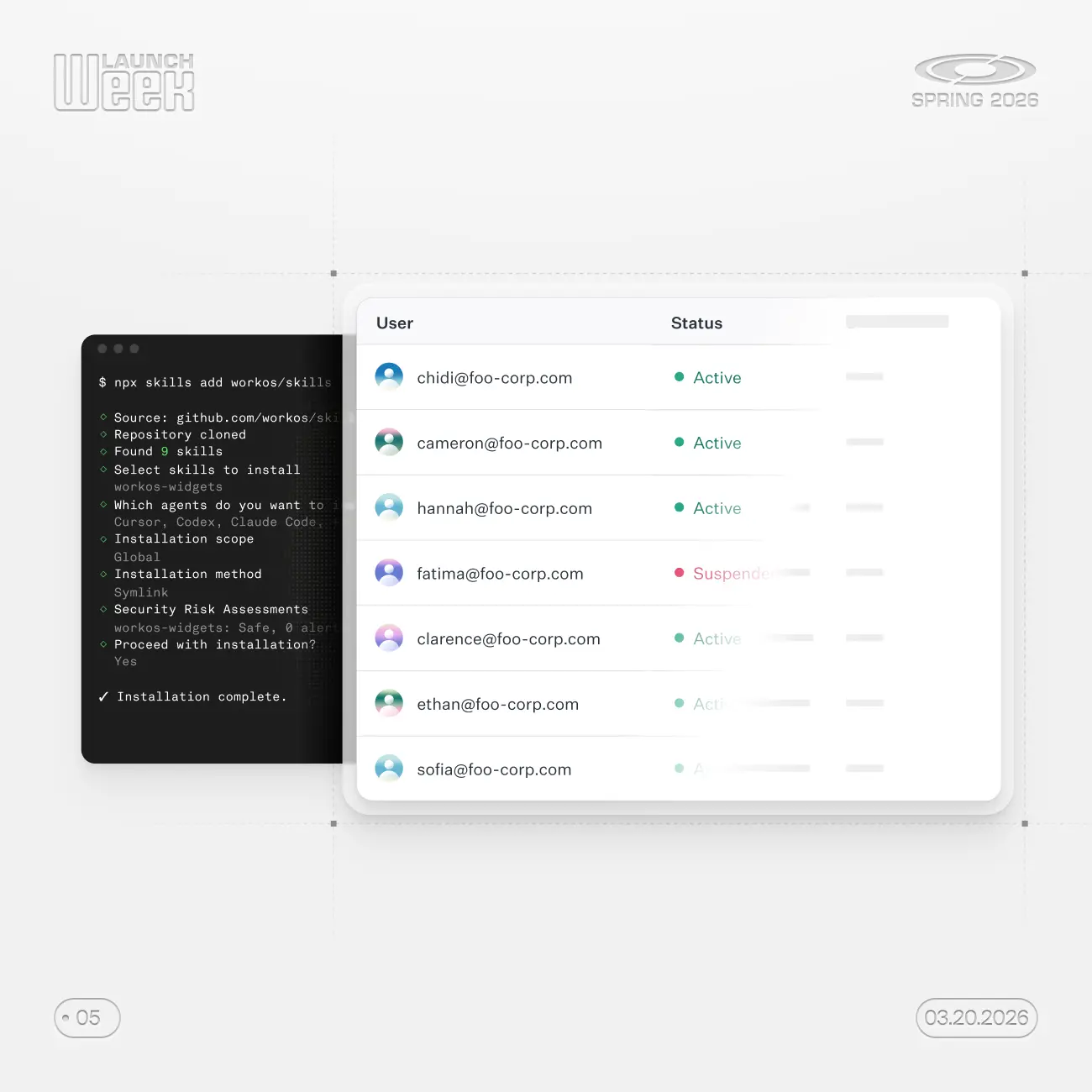
Use AI coding agents and WorkOS Skills to generate production-ready flows in your framework, language, and design system.
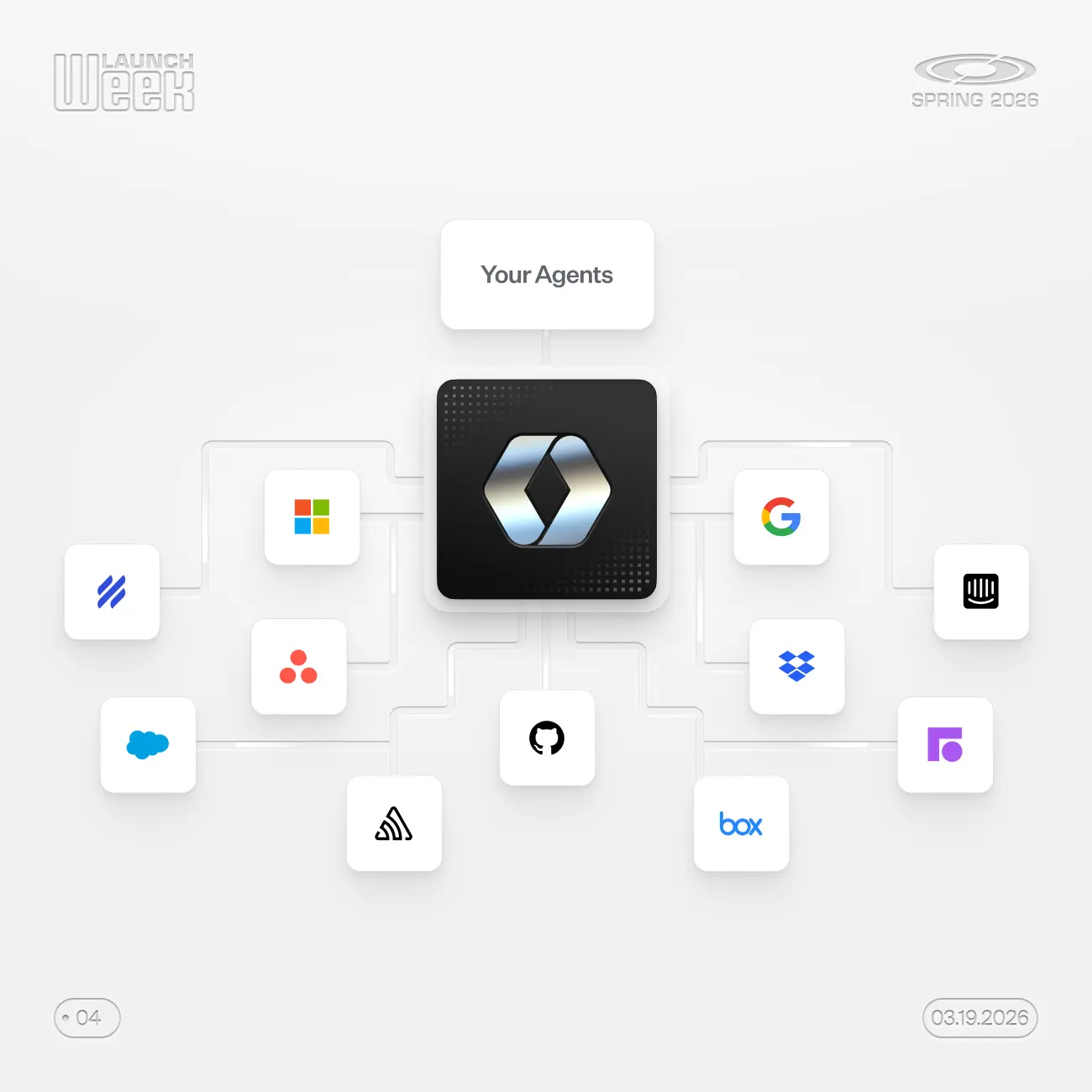
Grant agents time-limited access to OAuth connections using Pipes and MCP.
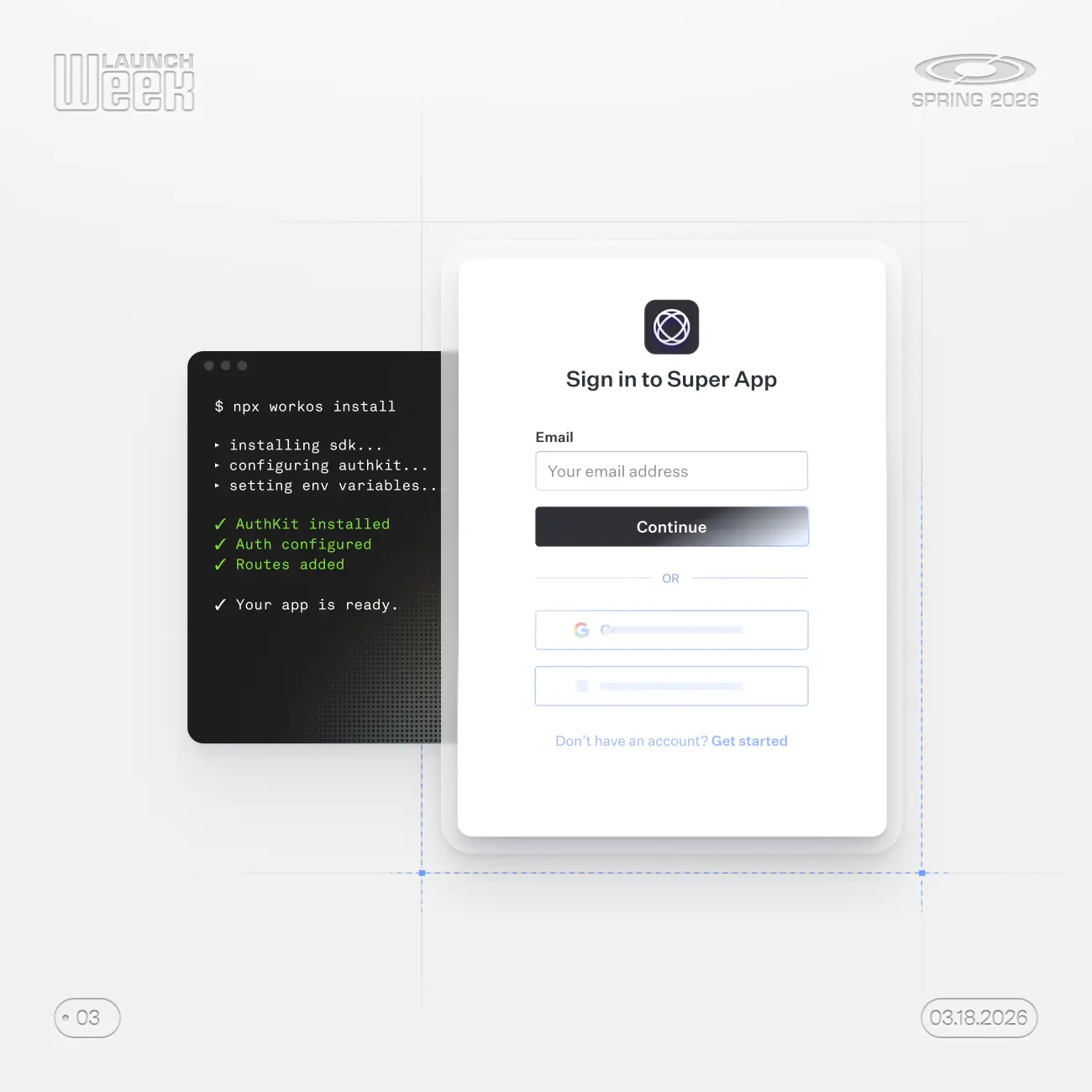
Develop with WorkOS entirely from your terminal, with agent-ready tooling built in.
For high-growth startups, time is the single most important resource. It’s so important that months of delay in shipping SSO and SCIM can result in a potential revenue loss of $7.95M compared to using a pre-built solution. The ROI difference is staggering too: 9% for a homegrown solution vs. 1,954% for a pre-built one. This article explains the methodologies used to calculate these numbers.
Explore why businesses seek Clerk alternatives, featuring top options like WorkOS, Auth0, Okta, Firebase, and OneLogin.
Learn what data access control is, why it matters, the various types, when to implement it, and effective strategies for doing so.
A breakdown of the five main types of access control models: Discretionary, Mandatory, Role-Based, Attribute-Based, and Relationship-Based access control.
Learn how to implement access control in your organization with our comprehensive guide and best practices.
Learn about the different API authentication methods, including how they work, their use cases, and best practices to follow.
Learn what an OIDC provider is and why you should use one, how to connect to an OIDC provider, and how to create your own OIDC provider.
RBAC for AuthKit, Fine-Grained Authorization early access, SCIM role assignment, updated Node SDK, and new Log Streams destination
Time is invaluable for SaaS startups aiming to become Enterprise Ready quickly. Building complex (yet table stakes) features in-house, like SSO and SCIM, can significantly delay enterprise adoption. In part 1, we will dive into the hidden challenges you will face with a homegrown solution, highlighting just how demanding and time-consuming the process can be.
AuthKit now supports RBAC as part of its core authorization capabilities. RBAC is a common authorization scheme where each user is assigned one or more roles, and each role is assigned a set of permissions that defines which resources and actions the user can access in your application.
Developer Week recap, Apple OAuth, User Management with SCIM, IdP role assignment, the Remix example app, and more
Identity linking consolidates duplicate accounts with their own authentication credentials into a single account. While this seems straightforward, it involves a number of considerations around email and domain verification. WorkOS handles these complexities and provides secure identity linking by default.
When we launched User Management along with a free tier of up to 1 million MAUs, we faced several challenges using Heroku: the lack of an SLA, limited rollout functionality, and inadequate data locality options. To address these, we migrated to Kubernetes on EKS, developing a custom platform called Terrace to streamline deployment, secret management, and automated load balancing.
Find out about the common problems with webhooks, like out-of-order events and traffic surges, and how the Events API solves them.
Route-level authentication specifies which pages require authentication, keeping relevant logic together. Middleware-level authentication follows a Zero Trust model and simplifies group route authentication. The choice depends on your application architecture, but an additional authorization layer is needed for complete security.
Please try a different search
Our global team is growing and we’re hiring all types of roles.
WorkOS builds developer tools for quickly adding enterprise features to applications.
This site uses cookies to improve your experience. Please accept the use of cookies on this site. You can review our cookie policy here and our privacy policy here. If you choose to refuse, functionality of this site will be limited.

.jpg)





.webp)


.png)


